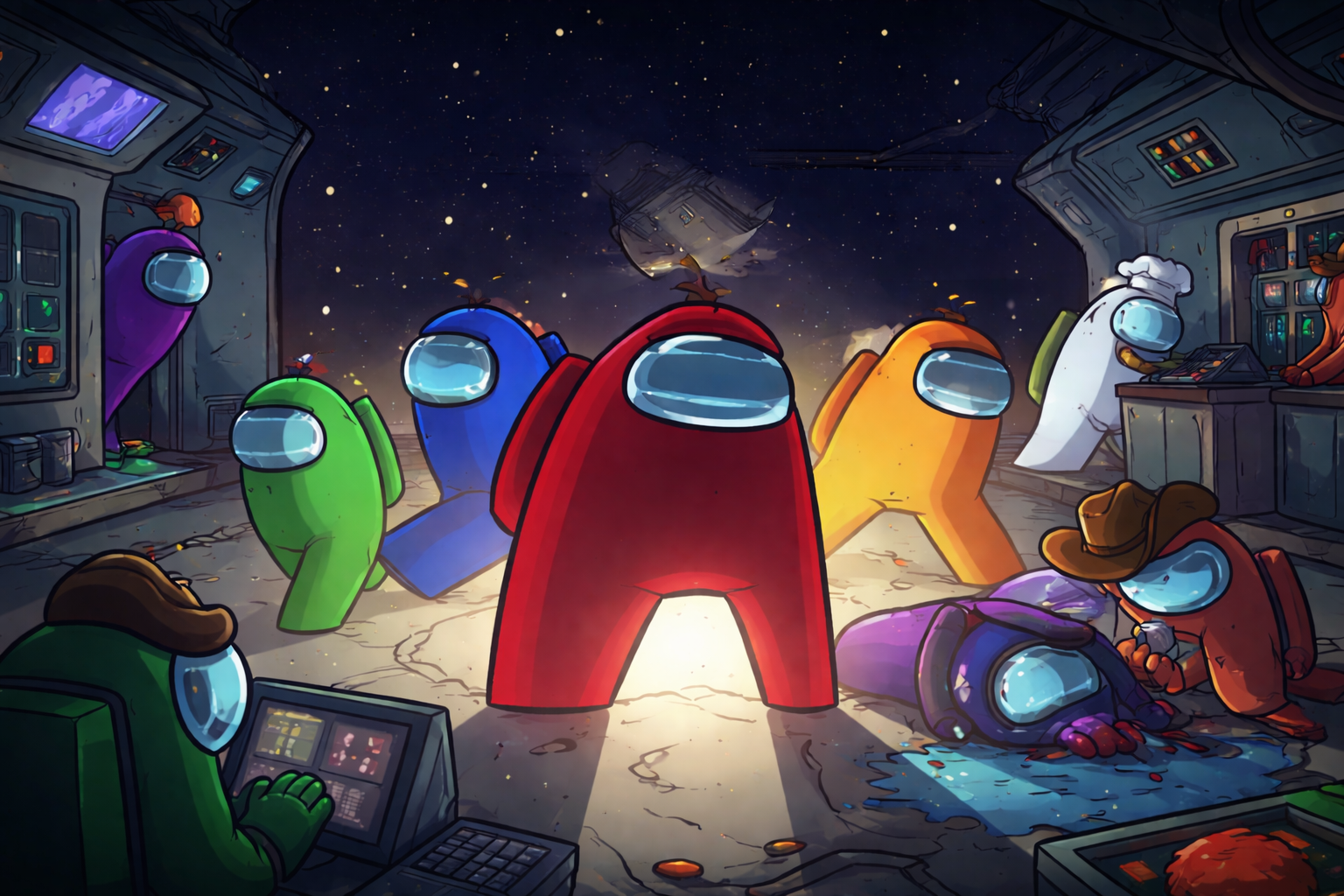
In Among Us, every accusation, every alibi, and every emergency meeting is shaped by one silent factor: the map. While social deduction drives the core experience, spatial awareness determines whether those discussions are grounded in truth or manipulation. Each official map — from tight corridors to sprawling layouts — creates different movement patterns, sightline opportunities, and sabotage potential. Understanding how these environments influence player behavior transforms gameplay from reactive guesswork into calculated deduction.
Map strategy in Among Us is not about memorizing rooms alone; it’s about predicting movement flow. Where do players cluster? Which tasks isolate individuals? How long does it realistically take to move from one objective to another? Skilled players internalize these answers and use them to validate or dismantle alibis. Whether you’re a Crewmate building trust or an Impostor crafting deception, knowing the map’s structural logic becomes your strongest advantage.
The Skeld: Classic Structure and Controlled Chaos
The Skeld remains the most iconic map because of its compact, interconnected design. Its layout encourages frequent crossovers, meaning players often pass each other in hallways or converge near central rooms like Cafeteria and Electrical. This high-traffic structure increases visual confirmation opportunities but also creates perfect ambush zones. Electrical, in particular, has become infamous for its narrow entry points and limited escape paths. Smart Crewmates understand that grouping loosely near high-risk areas increases safety without forming obvious voting blocs.
For Impostors, The Skeld offers balanced sabotage leverage. Reactor and O2 emergencies force split movement, dividing the group and creating temporary isolation windows. Vent networks connect critical kill zones such as MedBay, Security, and Electrical, allowing calculated repositioning. However, because the map is smaller, timing becomes crucial. A poorly executed kill leaves little room for long-distance alibi creation. Mastery on The Skeld comes from understanding how quickly information spreads — one misplaced step can collapse a deception in seconds.
Mira HQ: Vent Networks and Isolation Risk
Mira HQ shifts the strategic dynamic dramatically. Unlike The Skeld, it features a unique vent system where all vents are interconnected. This design increases Impostor mobility significantly, enabling rapid map traversal and unexpected reappearances. For Crewmates, this means visual task confirmation becomes more important, especially near Launchpad and Reactor. Movement paths are longer and more linear, making hallway encounters easier to track but also riskier due to fewer alternate routes.
Another defining feature of Mira HQ is its door log system, which records player movement through specific corridors. Experienced Crewmates use this data to reconstruct travel timelines during meetings. Meanwhile, Impostors must manage vent usage carefully to avoid contradictory movement patterns. Sabotages such as Communications can obscure task lists and delay verification, buying valuable time. On Mira HQ, strategy revolves around information management — both spatial and digital.
Polus: Open Spaces and Layered Visibility
Polus introduces a more open environment with separated buildings and outdoor traversal. Unlike the tight corridors of earlier maps, Polus provides wider sightlines, reducing the frequency of blind-corner kills. Crewmates benefit from longer visual tracking, especially in snow-covered exteriors where movement is easily noticed. However, building interiors still provide isolated risk zones, particularly near Specimen Room and Electrical.
Impostors on Polus rely heavily on sabotage timing. Because players spread out naturally across distant buildings, well-timed lights or seismic sabotages can create fragmentation. Vent placement is more localized, limiting map-wide teleportation but still enabling strategic repositioning within structures. Polus rewards patience. Fast, reckless plays are easier to trace due to extended visibility. Controlled eliminations aligned with emergency timing create far stronger long-term deception.
Airship: Scale, Verticality, and Choice
Airship is the largest official map, introducing vertical layers and spawn selection after meetings. Its size reduces early-game clustering and increases individual autonomy. Players often operate alone for extended periods, raising suspicion thresholds. Crewmates must balance task efficiency with visibility — isolation increases vulnerability. Long ladder animations and platform transitions also create predictable choke points that both roles must manage carefully.
For Impostors, Airship provides extensive vent routes but also increased exposure risk due to larger patrol distances. The ability to choose spawn points after meetings introduces strategic repositioning opportunities. Smart players anticipate where others are likely to spawn and plan movement accordingly. Because of its scale, Airship shifts strategy from tight micro-analysis to macro-awareness. Understanding probable travel routes becomes more valuable than memorizing individual room connections.
High-Risk Areas Across Maps
-
Electrical (The Skeld and Polus) due to tight spaces and common task overlap
-
Specimen Room (Polus) because of long entry corridors and delayed access
-
Reactor and O2 corridors during sabotage events
-
Launchpad (Mira HQ) due to early isolation
-
Ladder transitions and narrow bridges (Airship)
Core Map Awareness Habits for Crewmates
-
Track approximate travel time between rooms before accepting alibis
-
Note who enters and exits high-risk zones within short intervals
-
Use visual tasks strategically to build confirmed trust chains
-
Avoid clustering blindly in predictable kill hotspots
-
Pay attention to sabotage timing relative to player positioning
Adapting Strategy to Role and Lobby Settings
Map strategy does not operate in isolation from lobby settings. Vision range, kill cooldown, player speed, and task distribution significantly impact spatial control. On maps like Polus, reduced vision dramatically increases Impostor advantage in open areas. Conversely, higher player speed compresses travel timelines, making alibi verification more complex. Skilled players adjust their map reading habits depending on these parameters rather than relying on static assumptions.
Role adaptation is equally important. Crewmates must prioritize information sharing tied to map positioning rather than emotional accusations. Statements like “I saw them near Admin five seconds ago” carry more weight when grounded in realistic travel time. Impostors, meanwhile, build believable paths based on map flow. Claiming a task route that contradicts logical corridor movement often raises suspicion immediately. Strategic map awareness transforms discussions from chaotic guessing into evidence-based deduction.
Final Thoughts: The Map Is the Silent Player
Among Us thrives on conversation, but the map quietly dictates what conversations are possible. Each layout shapes trust dynamics, movement flow, and risk tolerance differently. Understanding those nuances elevates gameplay from reactive voting to strategic reasoning. Whether navigating the classic tension of The Skeld or the sprawling complexity of Airship, spatial awareness remains the foundation of smart play.
Mastering map strategy does not eliminate deception — it refines it. When you internalize travel times, choke points, and sabotage leverage, you gain control over narrative construction. In Among Us, the map is not just a backdrop; it is an active participant in every accusation and every victory.